Who we serve
Officers and members

Choose the work. Trust the order. Arrive ready.

Nobody joined a police service to hunt for overtime in a group text. One Bridge 10-8 puts every paid duty, callback, and overtime shift on your phone, offers it in the order your agreement sets, and sends the briefing with the shift — so the work finds you, fairly, with what you need to do it well.

At shift change in a station parking lot, a constable leaning on the open door of a patrol vehicle reads a list of available shifts on her phone while a colleague loads a duty bag.
1list for paid duty, callbacks, and overtime — on your phone
0group texts, whiteboards, or "whoever answers first"
Orderoffers follow the agreement, and your own offer history is visible to you
Attachedvenue, contact, report time, and instructions travel with every assignment
The member's problem

The work is there. Finding it should not be the job.

Visibility

You hear about it late, or not at all

Overtime goes to whoever saw the text first. If you were on a call or asleep after nights, it was gone before you knew it existed.


Fairness

You cannot tell if the order was followed

Seniority and rotation exist in the agreement, but the list lives on someone's desk. When it looks wrong, proving it means a grievance.

Details

You show up and learn the job on the curb

The address was in one message, the contact in another, and the dress code in nobody's. The foreman fills you in.

Pay

The hours you worked are not the hours on the stub

Changes, extensions, and cancellations were tracked by memory. Fixing it means paperwork and another pay period.

What members see

From "is there anything going?" to a shift you chose

Four things a member gets from 10-8 that a group text never gave them — and how the same record that offers the work keeps your credentials and hours straight.
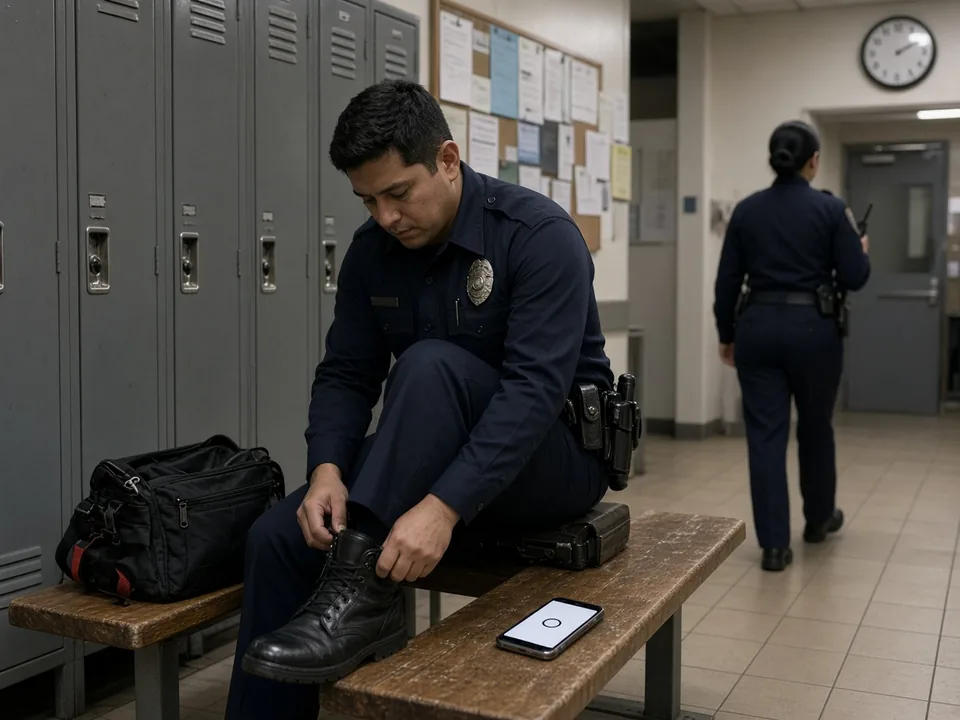
An officer laces his boots on a locker-room bench with his phone showing a shift confirmation beside him, while another officer heads for the door
See it

Every paid duty, callback, and overtime shift in one place

Today, available work is scattered across a group text, a whiteboard, and whoever the sergeant happened to reach first. In 10-8 it is one list on your phone: what the work is, where, when, what it pays, and whether you are eligible. Take it with one tap, or skip it, and get on with your day.

  • Paid duty, callbacks, and overtime on one screen, not three channels
  • Eligibility shown up front — no accepting a shift you cannot legally work
  • Accept from the car, the kitchen, or the locker room
How callbacks and overtime work
An off-duty officer at his kitchen table glances at a shift offer on his phone while helping his son with homework
Trust it

The offer reaches you in order — and you can see that it did

Fairness is not a promise; it is a record. 10-8 offers work in the order your agreement sets — seniority, rotation, equalization — and logs who was offered what, when, and what they said. If you think you were skipped, the answer is on the screen, not in a meeting three weeks later.

  • Offers follow the agreement your association helped configure
  • Your own offer history, visible to you
  • Declines and missed windows recorded the same way for everyone
Explore One Bridge 10-8
A constable seated in a patrol vehicle reads an assignment briefing on his phone before a stadium event, with barriers being set up beyond the windshield
Arrive ready

The briefing travels with the assignment

Venue, site contact, report time, what the client expects, what to wear, where to park. It arrives with the shift you accepted and updates if the client changes anything, so you are not learning the details from the foreman when you pull up.

  • Location, contact, and instructions attached to the assignment
  • Changes and cancellations reach you the moment they are made
  • The same details the coordinator and the client are looking at
How paid duty works
A range instructor with a scoring clipboard stands behind an officer at the firing line during a firearms qualification
Your record

Your credentials, your hours, your record — visible to you

Because the same company builds 1 Bridge Tec HRIS and 10-8, the record that says you are qualified is the record that offers you work. See your own expiring certifications before they cost you a shift, see the hours you worked before they reach payroll, and see your postings and documents without asking someone in HR to look them up.

  • Expiring credentials flagged to you, not just to the coordinator
  • Worked hours visible before the pay period closes
  • One login for the work you take and the record it lands in
Compliance and readiness
Why one company

The tool that offers you work knows who you are.

Most staffing apps only know your name and a phone number. Because One Bridge Tec builds the HR system too, 10-8 knows your rank, unit, credentials, seniority, and rest hours — so the offers you get are ones you can actually take, and the hours you work land where they should.

Eligibility

Offers you can take, not offers you have to decline

Credentials, rank and unit restrictions, and rest rules are applied before the offer reaches you. Less noise, fewer accepted shifts that get pulled back.

Credentials

No surprise lapses

Your firearms qualification, first aid, and other certifications are on your record with expiry dates you can see, so a lapse does not cost you a month of eligibility.

Pay

Worked hours go to payroll from the record

What you accepted, what changed, and what you actually worked are one thread, and that is what payroll sees. Nobody re-keys it from a text.

Career

One place for postings, documents, and your file

Internal postings, your documents, and your employment record are in 1 Bridge Tec HRIS, behind the same login you use to take work.

AI assistance, inside your building

Straight answers about your own situation

With Private AI, members can ask plain-language questions and get a cited answer — on hardware installed at the agency, with nothing about you or your shifts sent to a third-party AI service.

Eligibility

“Can I take this duty after tonight's shift?”

The rest-hour rule from your agreement, applied to your actual schedule, with the clause cited.

Policy

“What is the minimum call-out for a cancelled paid duty?”

The term quoted from the rate card or agreement — the same answer the coordinator gets, so nobody argues about the wording.

Record

“When does my first-aid certification expire?”

Your own record, read back to you, with the date and the recertification path.

See it working

Show your association what members will see.

Member buy-in decides whether a staffing system works. We will walk your executive and your association through the member's phone — the list, an offer, the briefing, the offer history — and answer the fairness questions before they become grievances.

Book a Demo How member data is protected See the same workflow from the coordinator's and the chief's side.
Common questions

Questions members ask

Do I have to install an app on my personal phone?
10-8 works in the browser on any phone, tablet, or computer, so you can use it on a personal or an agency device. Notifications for new offers are optional; you choose how you want to be reached.
Can I see why I was or was not offered a shift?
Yes. Your own offer history shows what you were offered, when, and how you responded. If you were not offered something, the eligibility rule that applied is visible to you, and the coordinator sees the same thing.
What does a client see about me?
What your service configures them to see — typically that the position is confirmed and who to expect on site. Your employment record, contact details, and personal information stay inside the agency's system.
What if I accept and then something changes?
Changes and cancellations made by the client or the coordinator reach you immediately, and the cancellation and minimum-hour terms in your agreement are applied from the record, not from memory.
Is the AI watching me?
No. Private AI answers questions you ask it about your eligibility, your record, and your agreement. It runs on hardware inside the agency, nothing about you is sent to a third-party AI service, and the decisions about who gets offered work are made by the rules your service configured, with a log people can read.

The work finds you. Fairly, with the details attached.

See the member's side of One Bridge 10-8 in a twenty-minute walkthrough.